
 Se Habla Español

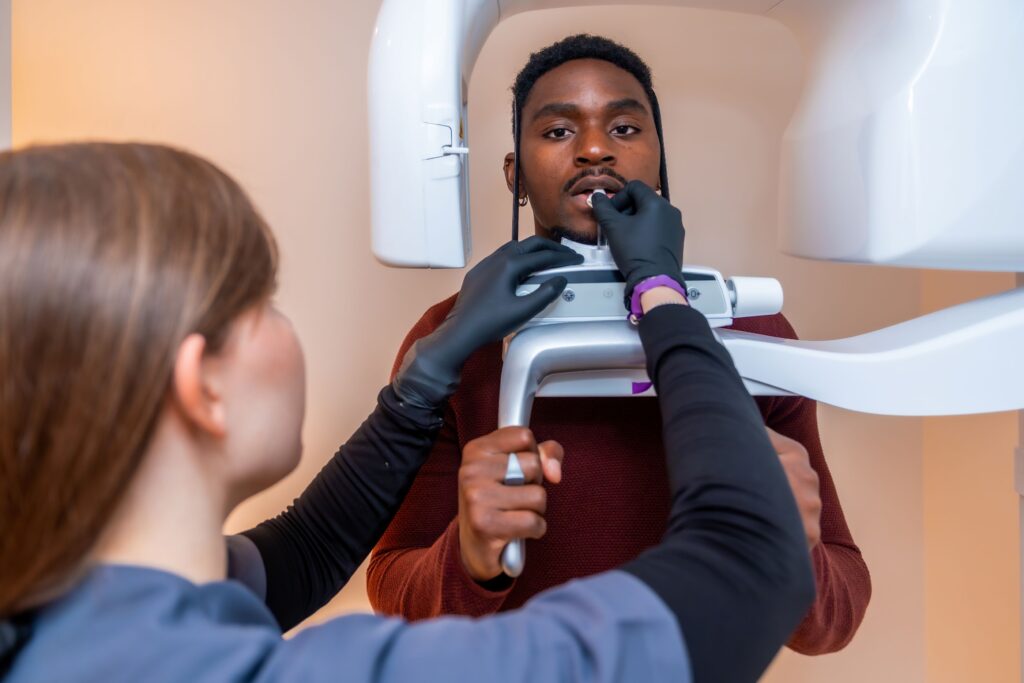
Visiting your dentist every 6 months for a routine checkup and cleaning allows them to catch and address areas of concern, such as cavities and gum disease. However, it’s possible for issues to develop under the surface of your teeth and connective tissues that can’t be seen with the naked eye.
As a result, many providers also take annual X-rays to help identify any concerns that might otherwise remain hidden and untreated. But thanks to updated dental technology, today many dentists utilize cone beam scanners, instead. Continue reading to learn more about the unique benefits of using this upgraded equipment!
What is A Cone Beam CT Scanner?
Many patients are accustomed to taking their annual dental X-rays, but if you’ve never had a CBCT (Cone-Beam Computed Tomography) scan, it’s only natural to have questions about what it is and how it works.
This advanced equipment includes a rotating cone-shaped X-ray beam that circulates around your head to capture hundreds of images of your teeth and gums in a short period of time (often 10 to 60 seconds). These are compiled to create a detailed 3D view of your mouth so that your provider can assess your condition and identify potential problems with greater accuracy and efficiency.
How Does CBCT Imaging Differ From X-Rays?
Many dentists have upgraded from more traditional dental X-rays to using CBCT scanners because of the many unique advantages they provide, including:
- Captures soft tissues and bone. Traditional imaging techniques are primarily used to view bone because they are hard and dense enough to block the applied radiation. Meanwhile, CBCT scans capture detailed images of both hard and soft tissues.
- Enhanced precision. This more advanced imaging method allows your provider to view small spaces with greater detail, resulting in more accurate diagnoses and treatment plans.
- Expedited results. A full-mouth scan can often be completed in under a minute and for faster, more convenient outcomes.
- Less invasive. There’s no need to bite down into plastic tabs or sensors, like with traditional dental X-rays. Instead, you hold your head still with your teeth on a guide piece while the device rotates around your head, which may be less likely to trigger a gag reflex.
Why Do I Need a CBCT Scan?
There are several reasons your provider might take a full CBCT scan of your mouth, such as:
- Accurate dental implant assessment and placement.
- Identify hidden issues such as impacted teeth, cysts or tumors, jaw injuries, or other concerns.
- Evaluate complex root canal issues, such as fractures or previously failed treatments.
- Identify dental or jaw misalignments and devise an appropriate orthodontic plan.
- Get a clear look at jaw joint anatomy to assist with TMJ (temporomandibular joint) related aches and disorders.
If you’re unsure why your dentist has recommended a CBCT scan or have additional questions about how it works, you can learn more by contacting their office directly!
About the Practice
Patients at Lancaster Family Smiles benefit from two providers who are passionate about helping them build and maintain their healthiest, most beautiful smiles. Dr. Je and Dr. Jeong collaborate to offer a comprehensive menu of services using state-of-the-art equipment, such as CBCT scanners, to improve comfort and accuracy. You can request an appointment on the website or call (469) 729-7707.